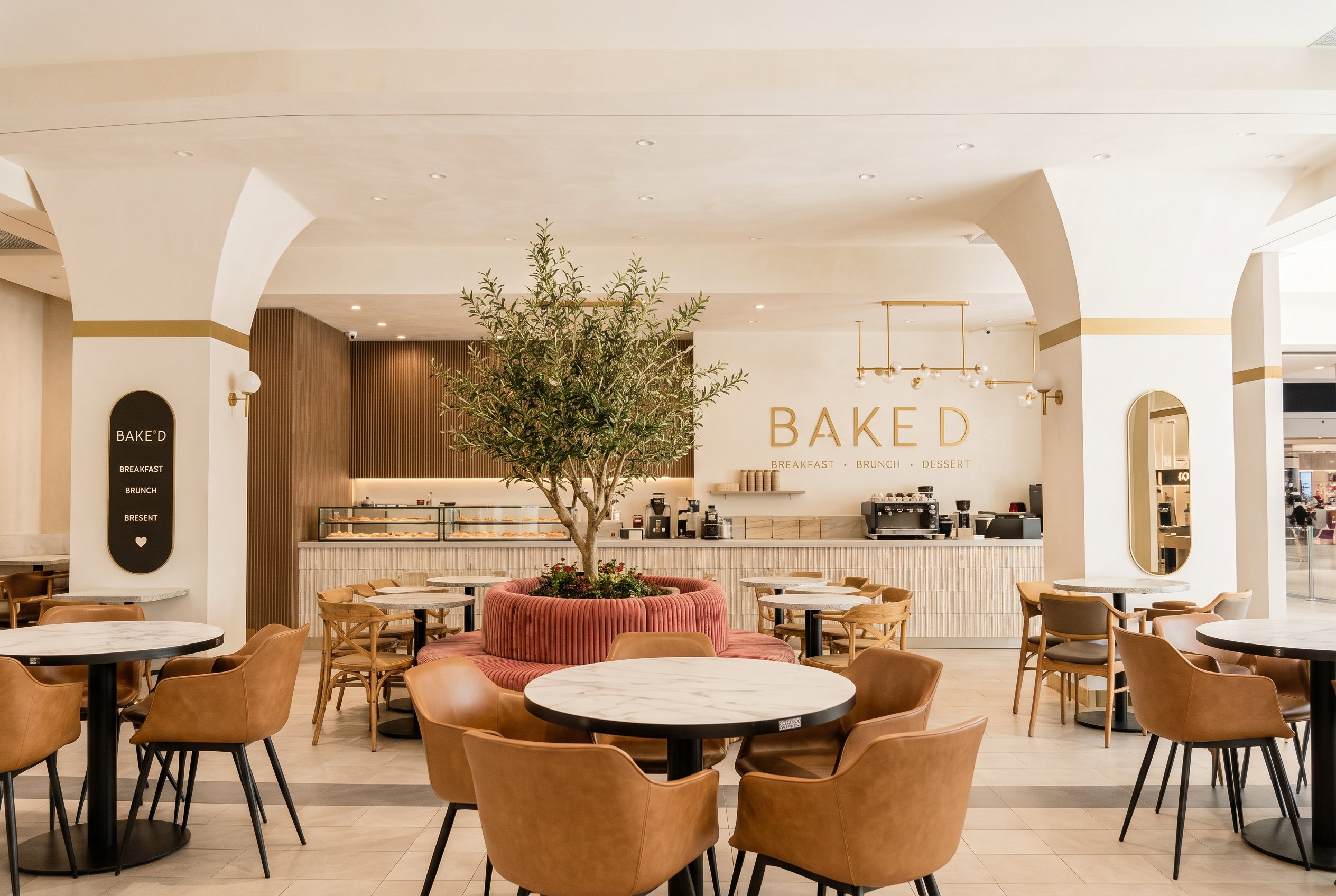
Ask any veteran restaurateur where the actual money is made in hospitality, and they’ll give you the exact same answer: the drinks menu.
Food carries tight margins, labour headaches and spoilage risks. The liquid gold that keeps the lights on is alcohol — the $18 cocktails, the marked-up bottles of pinot and the high-margin tap beers. The entire hospitality sector has spent decades optimising for patrons sitting around a table nursing drinks well past sunset.
So what happens when a brand looks at that foundational industry dogma and decides to build a business on the exact opposite premise?
Enter BAKED.
Instead of relying on craft beer taps or an extensive wine list, BAKED built an empire by trading ethanol for flour, sugar and pastry. By stepping outside conventional hospitality assumptions, they unlocked an enormous, underserved consumer base — and created a recession-proof destination venue packed day and night, rain, hail or shine.
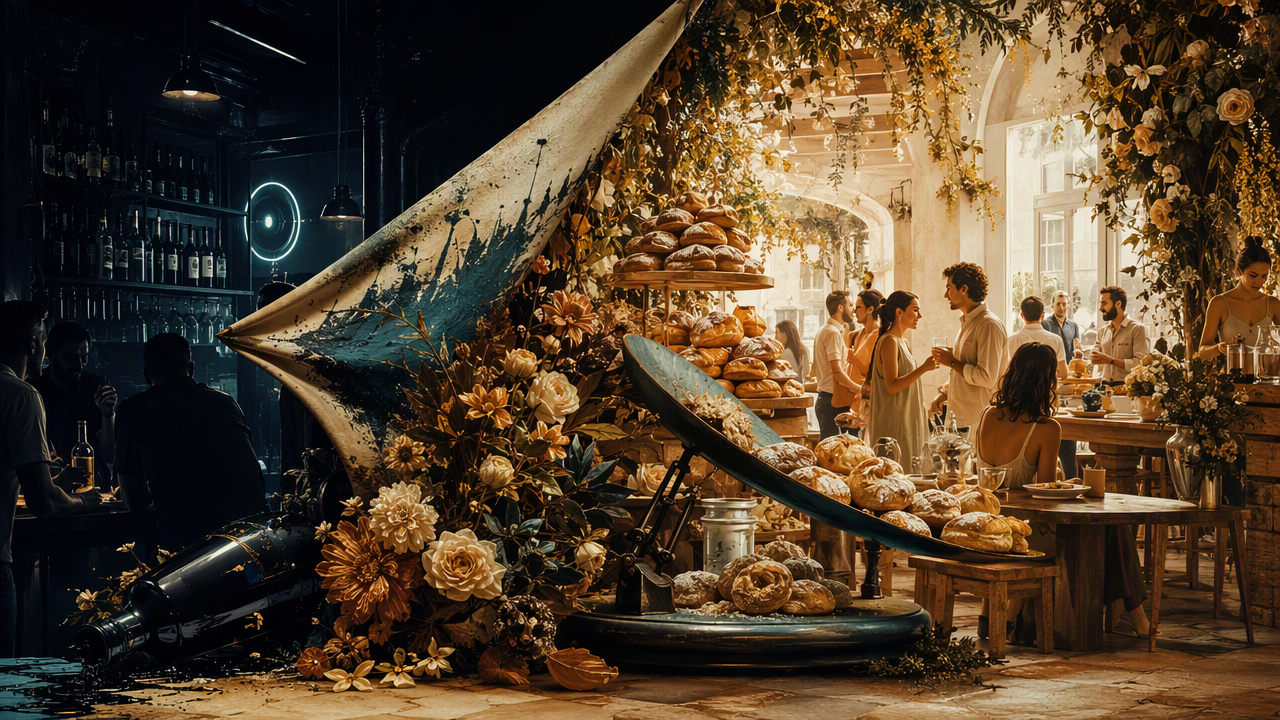
1. Uncovering the real pain point: socialising without the bottle
The brilliance of BAKED’s strategy starts with market segmentation. Most hospitality concepts view non-drinkers as an afterthought — offering a token mocktail or a lukewarm ginger beer while the rest of the venue revolves around the bar.
BAKED correctly identified the cultural values and social realities of Muslim families and non-drinking communities.
For this large demographic, the issue isn’t just ordering an alcohol-free drink; it’s the entire physical environment. They don’t want to socialise, celebrate family milestones or take out-of-town guests to spaces where neighbouring tables are four pints deep, getting progressively rowdier and shifting the whole venue’s atmosphere.
By committing to a strictly alcohol-free space, BAKED removed the friction entirely. They didn’t just open a bakery; they engineered a safe, dignified, culturally aligned third space where families, friend groups and communities can relax comfortably on a Friday or Saturday evening without dodging drunk crowds.
2. Destination aesthetics: the Instagram flywheel
An alcohol-free venue solves the comfort problem, but how do you drive sheer foot traffic? You make the space an unavoidable visual spectacle.
BAKED venues aren’t corner grab-and-go bakeries where you pick up a sourdough loaf and walk out in sixty seconds. They are high-concept destination spaces. From lush floral installations to curated interior design and dramatic architectural finishes, the venues are engineered to be photogenic magnets.
They provide the backdrop for the digital era: the kind of place people plan outings around, put on great outfits for, and eagerly share across Instagram and TikTok. By turning the cafe itself into the attraction, BAKED transforms customers into an unpaid, perpetual marketing engine.
3. The economics of the $16 matcha latte and the “brick” of cake
When you take $22 glasses of wine off the menu, your unit economics must come from elsewhere. BAKED solved this through theatrical, high-margin indulgence.
$14–$16
Specialty matcha and non-alcoholic drinks
$5–$6
Typical cafe price for a flat white or latte
The “brick” slice
When you order a slice of chocolate cake, you don’t get a delicate, European-style sliver dusted with icing sugar. You get a slab the size and density of an actual masonry brick. It’s generous, slightly absurd, deeply satisfying to look at, and practically begs to be captured on camera before anyone takes a bite.
Premium sipping
Traditional cafes cap their beverage pricing around the $5–$6 mark for standard flat whites and lattes. BAKED reimagined the beverage category entirely. With ceremonial-grade matcha, ornate layering, premium garnishes and show-stopping presentation, they routinely command $14 to $16 for specialty non-alcoholic drinks.
Flour, cocoa, dairy and matcha powder carry healthy gross margins when elevated by theatrical presentation. Customers aren’t just paying for calories; they are paying for a premium sensory experience — and they are happy to pay top dollar for it.
4. Rewriting the operating hours: the 6 am to 10 pm engine
Traditional bakery economics are notoriously punishing because of the operating clock. The typical artisan bakery fires up the ovens before dawn, rushes through the morning trade serving office workers and tradies grabbing flat whites and meat pies, and shuts its doors by 2 or 3 pm.
After 3 pm, their expensive floor space, commercial kitchen equipment and lease costs generate zero dollars.
BAKED broke that clock into distinct daily revenue cycles:
Morning to early afternoon. Standard morning trade — caffeine, savoury bites and early-morning meeting traffic.
Late afternoon to around 10 pm. When standard cafes shut and bars open, BAKED becomes a bustling evening lounge — the dessert destination, the family gathering spot and the post-dinner social hub.
By extending active trading until 10 pm without needing a liquor licence, they double the utility of their physical footprint and smooth out daily revenue spikes.
5. Menu breadth: catching the non-sugar sceptic
It’s easy to look at towering displays of pastries and giant cake slices and assume anyone without a raging sweet tooth is out of luck.
If you grew up conditioned to avoid sugar or simply prefer clean, savoury food, walking into a dessert-heavy venue usually feels like entering a minefield. You brace yourself to nurse an espresso and watch everyone else eat.
Yet this is where their operational rigour shows. Beyond the sugar-loaded showstoppers, the menu provides substantial, thoughtfully crafted savoury items and well-executed standard espresso coffee. Even the hardened savoury eater or the health-conscious family elder finds something real to eat.
By ensuring the menu doesn’t alienate the non-sweet tooth in the group, BAKED prevents group vetoes — so when a family or group of friends decides where to spend their evening, everyone agrees to walk through the doors.
The takeaway
Hospitality success isn’t about copying what every pub and bistro has done for fifty years. BAKED’s triumph lies in recognising that an enormous consumer segment had money to spend, an appetite for social connection and zero interest in sitting around a bar.
Walking away from the status quo is sometimes the most profitable move on the board.
By replacing alcohol with high-margin confectionery, dramatic interior aesthetics, flexible day-to-night operating hours and inclusive savoury options, BAKED proved exactly that.
Is there an underserved customer in your market?
I help Australian businesses find the segment everyone else is overlooking — and build marketing around it.